How to Clear Your Mind When You Have Too Much To Do - 7 Ways

It’s 11 p.m. You’re exhausted, but your brain has other plans.
Don’t forget to reply to Sarah. The report is due Thursday. Did you pay the electric bill? You really should start that project…
Sound familiar?
When you have a lot to do, your mind feels crowded. Tasks, worries, and half-finished plans compete for your attention all day. The moment you try to rest, they get louder.
Here’s the good news: a cluttered mind is not a character flaw, and you don’t have to live with it. In this article, you’ll learn seven practical techniques to clear your mind when you have too much to do, so you can focus, breathe, and actually get things done.
It starts with one rule: your head is a terrible place to store your tasks. Let’s fix that.
In this article:
- Why a Busy Mind Makes Everything Harder
- 7 Ways to Clear Your Mind When You’re Overwhelmed
- 1. Do a Brain Dump
- 2. Separate Tasks from Worries
- 3. Pick Your 5 Priorities for the Day
- 4. Break Vague Tasks into Smaller Steps
- 5. Use the 2-Minute Rule
- 6. Take Real Breaks
- 7. Build a System Your Brain Can Trust
- A Simple Daily Routine to Keep Your Mind Clear
- How [App Name] Helps You Clear Your Mind
- FAQ
Why a Busy Mind Makes Everything Harder
Think about what you’re asking your brain to do every single day:
- Remember today’s tasks
- Remember tomorrow’s and next week’s
- Track what’s urgent, what can wait, and what’s due when
- Keep every deadline in mind
- Still leave mental space to think, plan, and brainstorm
That’s a lot, and it’s all happening in the same place at the same time.
Here’s the problem: your brain isn’t built for this. It’s built for having ideas, not storing them. Ask it to hold twenty tasks, five deadlines, and three competing priorities at once, and something has to give. Usually, that something is your focus.
Your Brain Keeps Nagging You at the Worst Moments
Ever been deep in a task when, out of nowhere, your brain reminds you of an email you forgot to send? Or a project you parked last week but felt important?
That’s not a glitch. It’s the Zeigarnik Effect: our minds keep circling back to unfinished tasks, nudging us at the worst possible moments. Great for not forgetting things. Terrible for concentrating.
Switching Tasks Comes With a Hidden Cost
So you stop and deal with that nagging thought. No big deal, right?
Actually, it is. Every time you switch tasks, your brain has to pause, restart, and reload the context of whatever you were doing before. Research on task switching shows this back-and-forth is genuinely taxing: you lose the seconds you spend switching, and you lose your momentum with them. (study)
The Real Problem
Mental clutter isn’t a discipline problem. It’s a systems problem. You’re using the world’s best thinking machine as a sticky note, and it’s exhausting.
The fix is to move things out of your head and into a system your brain can trust. The seven techniques below help you do exactly that.
7 Ways to Clear Your Mind When You’re Overwhelmed
1. Do a Brain Dump
Remember the Zeigarnik Effect, your brain nagging you about unfinished tasks? Here’s the good news: the nagging quiets down the moment those tasks live somewhere outside your head.
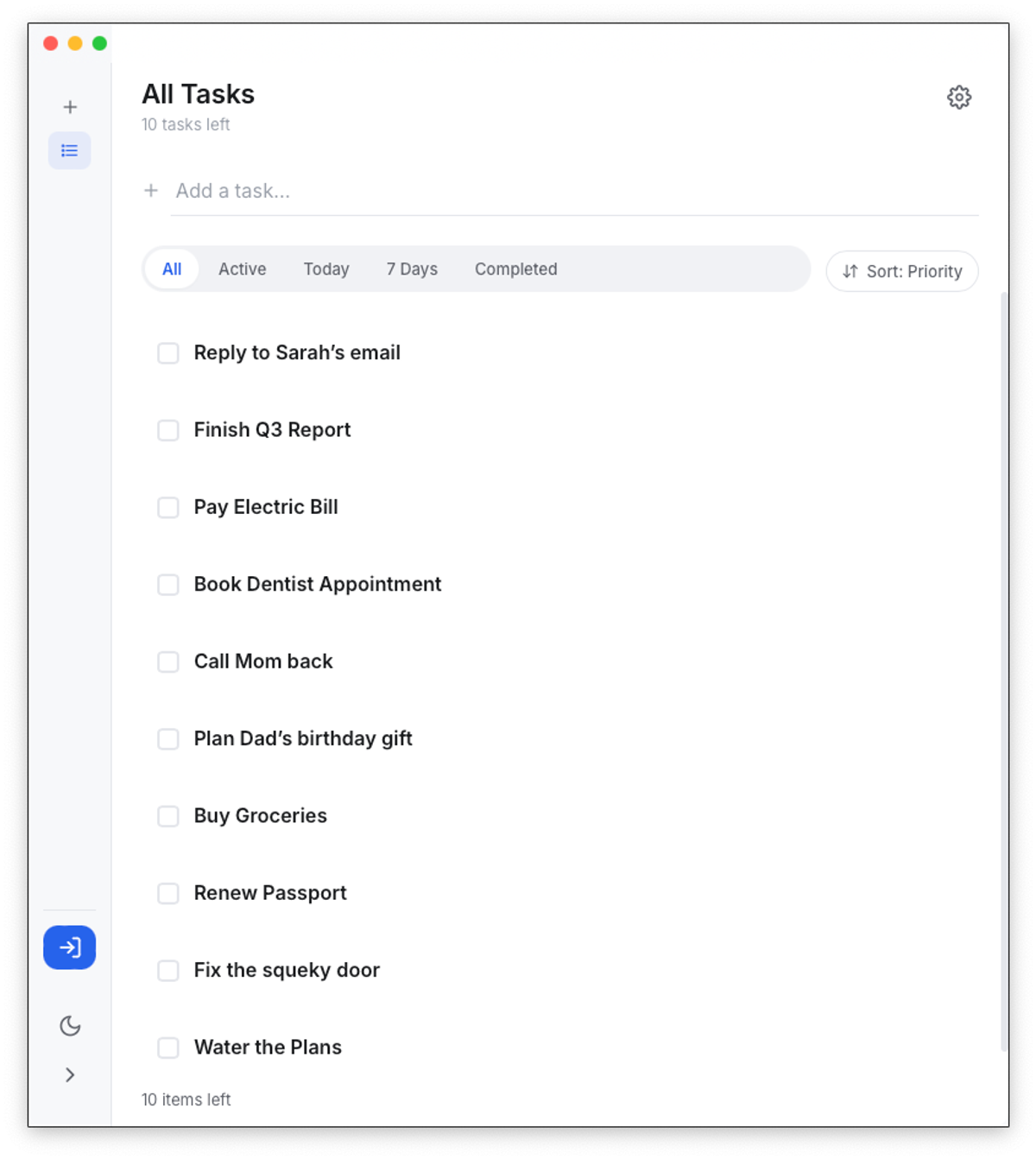
A brain dump is exactly what it sounds like. Take ten to fifteen minutes and write down everything on your mind. Every task, deadline, worry, idea, and half-plan. The email you need to send. The appointment you keep meaning to book. The thing you’ve been avoiding for two weeks.
Skip the organizing and skip the judging. Write everything down.
Thinking about your tasks, or stressing about them, changes nothing. Writing them down gives your thinking order, and most people feel lighter before they’ve even finished.
2. Separate Tasks from Worries
As humans, we worry. We stress about things that haven’t happened yet and fear uncertainties. That’s normal, but worrying by itself never moved a task forward.
Instead, write down what the fear is actually about and what you could do about it. Often there’s a doable action hiding inside the worry: “What if the presentation goes badly?” becomes “prepare extra answers for the Q&A.” Turn those doable parts into tasks.
What if there’s no action inside the worry at all? Acknowledge it, then let it go. A worry isn’t a task; you can’t complete it, so it will sit on your list generating noise forever.
3. Pick Your Five Priorities for the Day
By now you should have a handful of tasks on your list. A long list of to-dos won’t help you, though. It will scare you off.
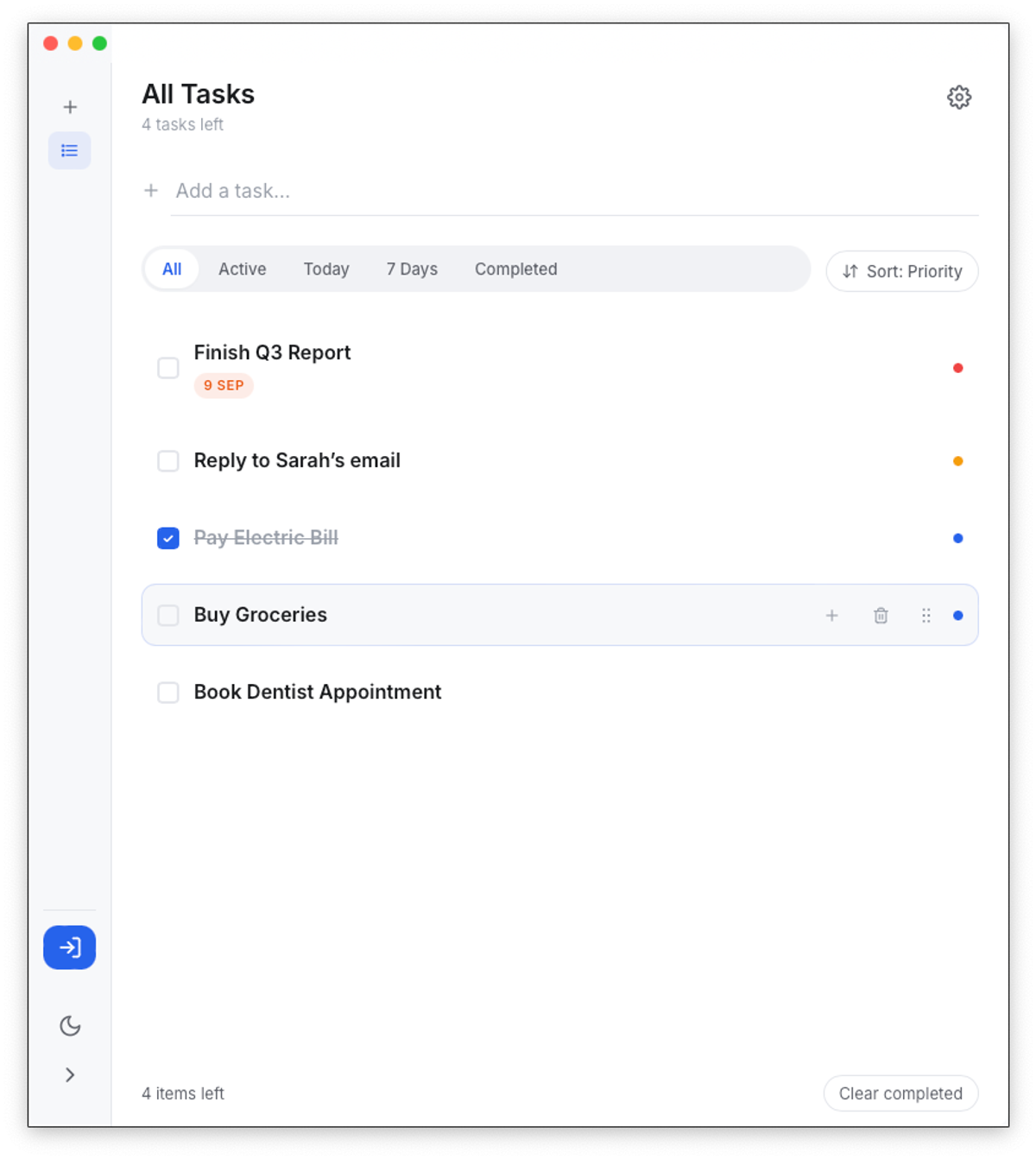
So each morning, pick five tasks you can realistically do today, and keep the rest for another day.
Why five, and not everything? Because when everything is a priority, nothing is. A finished list of five feels great. An unfinished list of twenty-five feels terrible, even if you did the exact same amount of work.
Your other tasks won’t disappear. They’re safe on the list, waiting. But today only has room for five, and your mind deserves to know it.
4. Break Vague Tasks into Small Steps
Sometimes it’s hard to make progress because the task is too vague. Where do you even start? Your brain doesn’t know, so it doesn’t start, and the task keeps nagging you from the back of your mind.
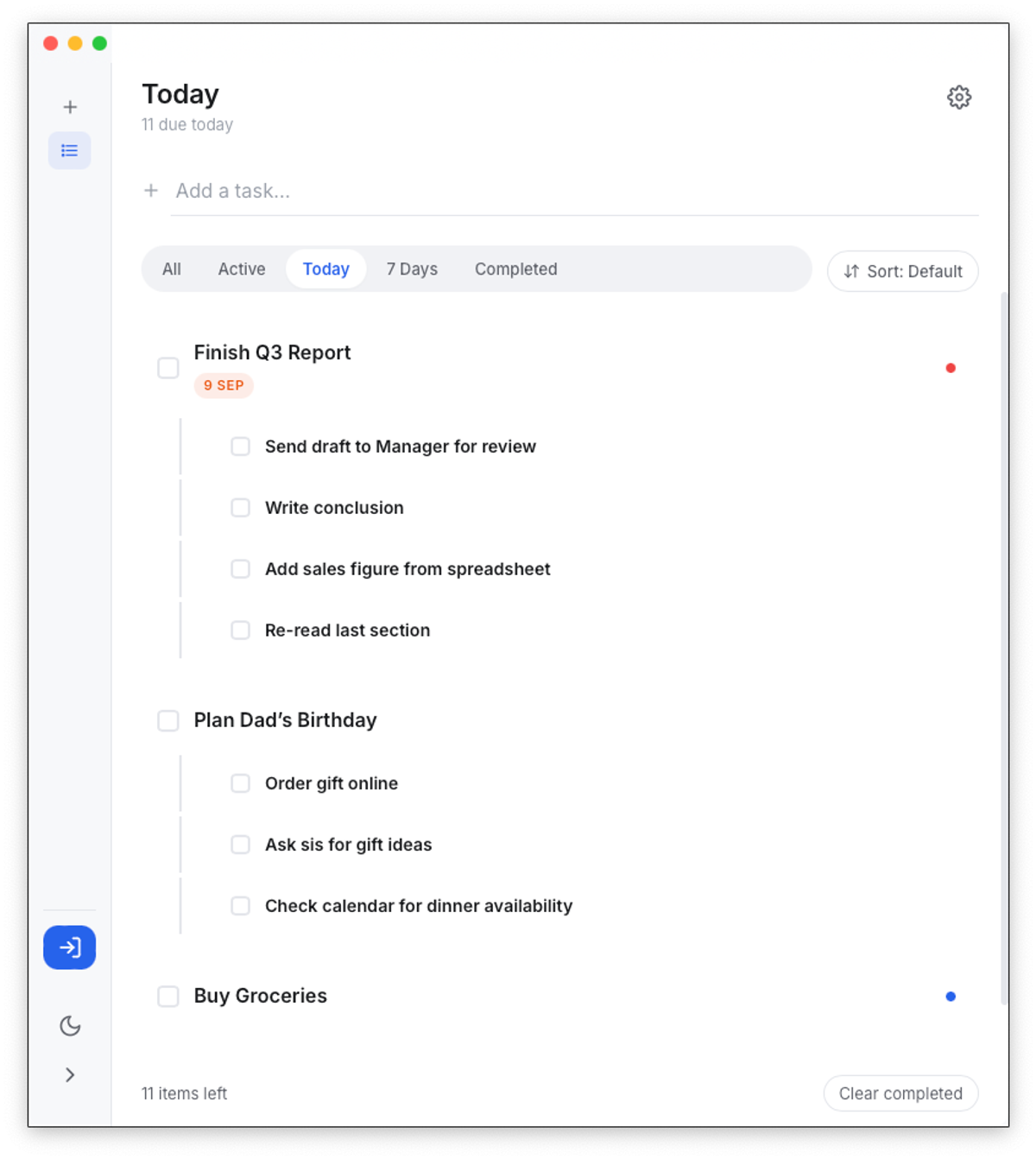
The fix: write down what the task is actually about, then break it into smaller steps.
- “Write report” → “Open a doc and bullet-point three sections”
- “Plan the trip” → “Search two possible weekend dates”
- “Clean the garage” → “Put five things in a donation box”
Here’s the thing: sometimes a small task is actually a big task in disguise. You won’t know until you break it down into achievable steps. Make the first step so small it feels silly to skip. Once you’ve started, momentum does the rest.
5. Use the Two-Minute Rule
Here’s the rule: if a task takes less than two minutes, don’t write it down. Do it now.
Reply to the text. Rinse the mug. Forward the file. These micro-tasks are cheap to do but expensive to carry; each one occupies mental space and becomes another thing for your brain to remind you about later.
One caveat: if you’re in deep focus on something important, don’t let a two-minute task break your momentum. Capture it quickly, and batch the quick stuff for when you’re between tasks anyway.
6. Take Real Breaks
Your brain is an organ, and like any organ it can get tired and overused. When that happens, it becomes less effective and your creativity drops. It needs rest, like the rest of your body.
So give yourself permission to take breaks; they’re necessary. Work in focused blocks of twenty-five to fifty minutes, then step away for five to ten. Stretch, take a short walk, get a glass of water, look out a window.
One rule, though: scrolling doesn’t count. It entertains your brain, but it doesn’t rest it. You’ll come back to your desk just as noisy as you left it. A rested brain clears itself. A fried one replays to-dos on loop.
7. Build a System Your Brain Can Trust

Each technique above helps on its own, but the one that makes them all stick is this: turn them into a system.
Here’s the key: your brain won’t stop reminding you about tasks until it trusts that they’re safe somewhere. A sticky note that gets lost? No trust. A mental note? Definitely no trust. Your brain has been burned before, so it keeps everything on file, just in case.
A trusted system has three ingredients:
- Fast capture: a thought pops up, you get it out of your head in seconds
- Clear organization: deadlines, priorities, and reminders live outside your head
- Regular review: a few minutes each evening to close loops and set up tomorrow
When your brain trusts the system, it finally lets go. You’ll remember tasks when you need them, not at 11 p.m. when you’re trying to sleep.
Apps and tools can do a lot of this heavy lifting for you. More on that below.
A Simple Daily Routine to Keep Your Mind Clear
If you’re new to all of this, here’s a simple routine to start with:
- Morning: Do a brain dump, then pick your five tasks for today.
- During the day: Whenever an idea or worry pops up, capture it immediately. Put it on the master list, and let your brain stop holding onto it so it can get back to work.
- Evening: Review your day. Cross off what’s done, move what isn’t, and pick tomorrow’s five. Five minutes, and the day’s open loops are closed, so they don’t follow you to bed.
How Lakun Helps You Clear Your Mind
Paper works until it doesn’t. Notes get lost, they don’t remind you when something is due, and they’re never with you when a thought strikes at the grocery store. Remember the trust problem from technique seven? That’s exactly where paper fails, and it’s why we built Lakun.
- Brain dumps in seconds. When a thought strikes, open Lakun, type it out, and let it go. Everything you capture lives in one safe place, with no scraps of paper and no “where did I write that down?” moments.
- Your five priorities, front and center. Give each task a priority and a deadline, then mark the ones that matter today. The important few stay in view, so you always know what deserves your attention now, and what can wait.
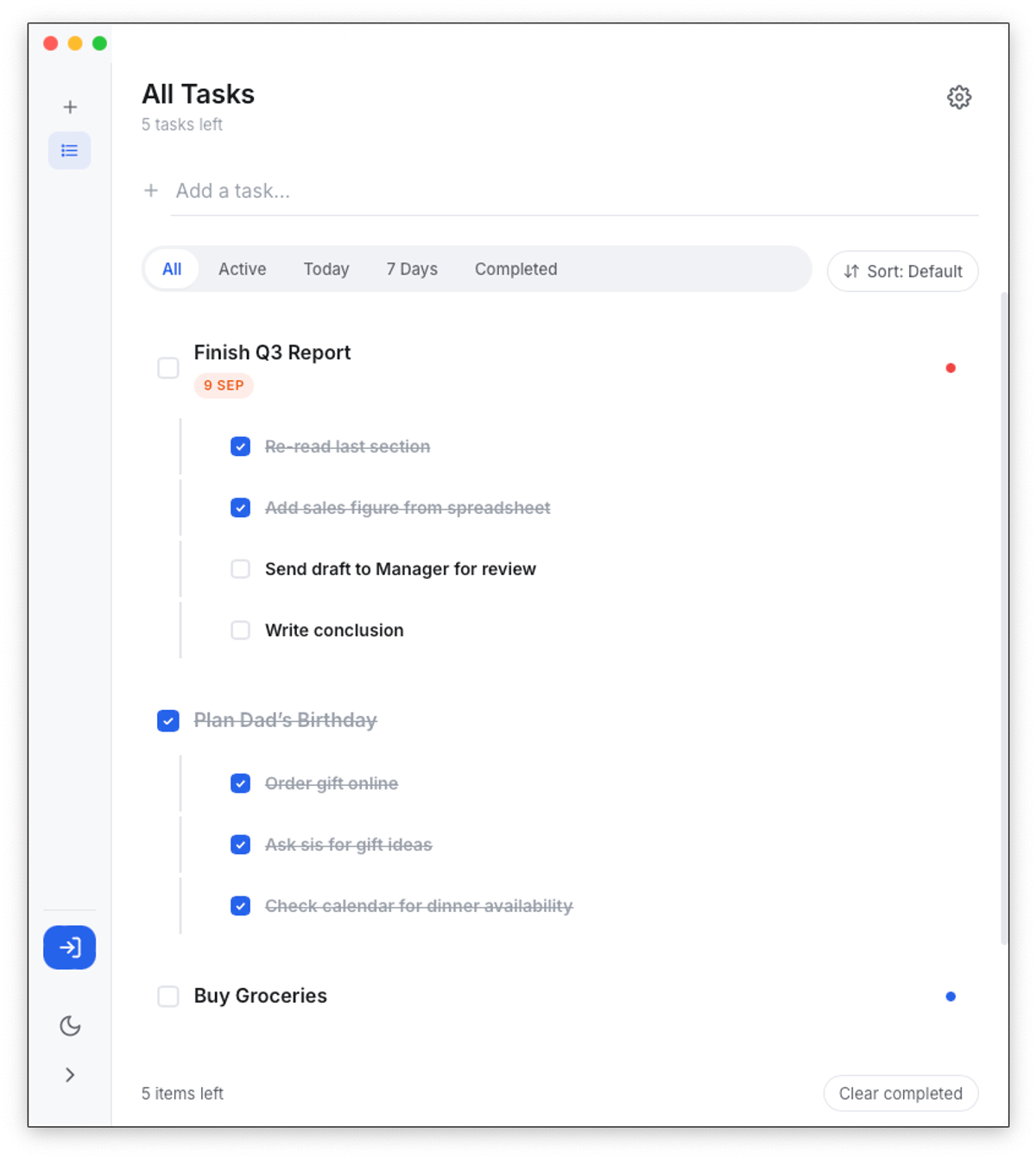
- Deadlines that remind themselves. Every task carries its own due date. Open the built-in calendar to see what’s due today, tomorrow, or next month. The deadline does the remembering, so you don’t have to.
- A review built in. At a glance, see today’s tasks and everything you’ve already completed. That quick daily review is what keeps your system, and your trust in it, running.
FAQ
Why Do I Feel Overwhelmed When I Have a Lot to Do?
Because your brain is trying to store and track every unfinished task at once. Psychologists call the constant mental nudging the Zeigarnik Effect: unfinished tasks keep resurfacing in your mind, which crowds out focus and drains energy. The fix is to move tasks out of your head and into a trusted external system.
How Do I Stop Thinking About Tasks at Night?
Do a quick brain dump before bed: write down everything on your mind, plus tomorrow’s top five tasks. Your brain keeps replaying tasks because it’s afraid you’ll forget them. Writing them down gives it permission to let go.
What Is a Brain Dump?
A brain dump is the practice of writing down everything on your mind, including tasks, worries, deadlines, and ideas, without organizing or filtering. It clears mental clutter by transferring your mental load onto paper or an app.
How Many Tasks Should I Put on My Daily List?
Aim for three to five. A short list you can actually finish builds momentum. A long list you can’t finish creates stress, even with the same amount of work done.
Conclusion
A cluttered mind is a storage problem, not a character flaw. Your brain is brilliant at having ideas and terrible at holding them.
So move the tasks out. Dump the worries. Pick your five. Build a system your brain can trust.
And the next time it’s 11 p.m. and your brain starts running its checklist, it won’t need to. You’ll have a system for that.